The reporter from Men’s Health asked me: “You finish dinner, even a satisfying low-carb dinner,” — he is a low-carb person himself — “you are sure you ate enough but you are still hungry. What do you do?” I gave him good advice. “Think of a perfectly broiled steak or steamed lobster with butter, some high protein, relatively high fat meal that you usually like. If that doesn’t sound good, you are not hungry. You may want to keep eating. You may want something sweet. You may want to feel something rolling around in your mouth, but you are not hungry. Find something else to do — push-ups are good. If the steak does sound good, you may want to eat. Practically speaking, it’s a good idea to keep hard-boiled eggs, cans of tuna fish around (and, of course, not keep cookies in the house).” I think this is good practical advice. It comes from the satiating effects of protein food sources, or perhaps the non-satiating, or reinforcing effect of carbohydrate. But the more general question is: What is hunger? Read the rest of this entry »
Targeting insulin inhibition as a metabolic therapy in advanced cancer. Part 2. The hypothesis.
Posted: November 30, 2012 in Cancer, Cell Signaling, evolution, ketogenic diet, low-carbohydrate dietTags: biochemistry, Cancer, carbohydrate, evolution, hunter-gatherer, insulin
Guest post: Dr. Eugene J. Fine
Last time I discussed our pilot study showing the effects of carbohydrate (CHO) restriction & insulin inhibition (INSINH) in patients with advanced cancers. We described how the molecular effects of INSINH plus systemic (total body) effects like ketosis might inhibit cancer growth. My goal now is to present the underlying hypothesis behind the idea with the goal of understanding how patients with cancers might respond if we inhibited insulin’s actions? Should all patients respond? If not, why not? Might some patients get worse? These ideas were described briefly in our publication describing our pilot protocol. Read the rest of this entry »
Targeting insulin inhibition as a metabolic therapy in advanced cancer
Posted: October 15, 2012 in Cancer, Cell Signaling, ketogenic diet, low-carbohydrate dietTags: Cancer, carbohydrate, dietary guidelines, ketogenic diet, low carbohydrate
Dr. Eugene J. Fine. Dr. Feinman invited me to contribute a guest blog on our recently published cancer research study: “Targeting insulin inhibition as a metabolic therapy in advanced cancer: A pilot safety and feasibility dietary trial in 10 patients” which has now appeared in the October issue of the Elsevier journal Nutrition, with an accompanying editorial. Today’s post will focus on this dietary study, and its relation to the general problem of cancer and insulin inhibition. Part II, next week, will discuss in more detail, the hypothesis behind this study. Richard has already mentioned some of the important findings, but I will review them since the context of the study may shed additional light. Read the rest of this entry »
Suddenly last summer. Part II
Posted: October 2, 2012 in Cancer, Cell Signaling, low-carbohydrate dietTags: biochemistry, carbohydrate, cell biology, insulin, low carbohydrate, nutrition
In the last post, I had proclaimed a victory for dietary carbohydrate restriction or, more precisely, recognition of its explicit connection with cell signaling. I had anointed the BMC Washington meeting as the historic site for this grand synthesis. It may have been a matter of perception — many researchers in carbohydrate restriction entered the field precisely because it came from the basic biochemistry where the idea was that the key player was the hormone insulin and glucose was the major stimulus for pancreatic secretion of insulin. We had largely ignored the hook-up with cell-biology because of the emphasis on calorie restriction, and it may have only needed getting everybody in the same room to see that the role of insulin in cancer was not separate from its role in carbohydrate restriction. Read the rest of this entry »
Flawed studies II. Occam’s Razor and How to Reduce Fructose Consumption.
Posted: July 27, 2012 in Crisis in Nutrition, Fructose, lipid metabolism, low-carbohydrate diet, Lustig, Occam's Razor, Reduce Fructose ConsumptionTags: carbohydrate, low carbohydrate, nutritional studies, statistics
“I may have killed a dozen men but I never stole a horse.”
— last words of outlaw in the American West before being hanged.
 Where we’re going. The bottom line on this post is that for obesity, diabetes and general health, the predominant effect of diet, the major contribution to the outcome — A in the equation above — is provided by substituting fat (any fat) for carbohydrate (any carbohydrate). That’s what the science says. That will give you the best effect. The B contribution (type of fat, type of carbohydrate) is strictly secondary. The practical consequence: if for some reason, you want to reduce fructose in the diet, the best advice is to reduce carbohydrate across the board. You can then add the additional advice “preferably sugar and high fructose corn syrup” but even if B doesn’t kick in, you will surely get a benefit. Most of all, if you take out Pepsi® and put in Pepperidge Farm® Whole Wheat Bread, you may not accomplish much.
In practical terms, confronted with a phenomenon that has many controlling variables, make sure you can’t do with one before you bring in the others. In nutrition, when people say that the phenomenon is very complicated, they frequently mean that they don’t want to look at a simple explanation. On its practical side, if a patients in a dietary experiment responds to the level of carbohydrate, you have to assume that carbohydrate across the board is the controlling variable. If, however, you think that it is specifically the fructose in the diet that caused the effect, or if you think that it was an additional effect of fructose beyond its role as carbohydrate, then that is something that you have to show separately. Until you do, the fructose effect is sliced off by Occam’s Razor. In terms of policy, you don’t want to go after fructose unless you are sure that it is not primarily the role of fructose acting as a carbohydrate.
So, there is a logical question surrounding recommendations against sugar and especially against fructose. What we know well in nutrition is that if you replace carbohydrate with fat, as in Krauss’s experiment described in the previous post, things improve and this is why we suggest low-carbohydrate diets as the “default diet,” the one to try first for diabetes and metabolic syndrome and probably for cardiovascular risk. I have, however, received at least two emails from well-known nutritionists saying that “the type of carbohydrate is more important than how much carbohydrate” and, of course, Rob Lustig is everywhere telling us how toxic sugar is but never suggesting that a low carbohydrate diet is any kind of ideal. On the face of it, the idea doesn’t make much sense. Fructose is a carbohydrate so the amount and type are not easily separable.
There are all kinds of strange things in nutrition. People actually say that the type of diet you are on is less important than whether you stay on the diet. While true, it is like saying that if you are baseball player, whether you get a hit depends less on who’s pitching than whether you remember to show up for the game. But anyway, I decided to ask the question about relative importance of type and amount of carbohydrate on facebook and on a couple of blogs where things like Hizzona’ Michael Bloomberg’s Big Bottle Ban or related questions was being discussed. Here’s how I put it.
For general health, should you change the type of carbohydrate or replace the carbohydrate with fat (any natural fat, no trans-fat)? It’s a thought experiment (not real world situation with subtleties). You only get three choices: For general health (no change in calories):
1. Change type of carbohydrate
2. Replace carbohydrate with fat
3. It doesn’t matter
Strangely enough, I did not get very many answers. I think that people didn’t like the question and even when they voted, they wanted to put in disclaimers:
ANS: 2. Replace carbohydrate with fat But I want to add; not replacing ALL the carbs. Only the worst ones. You know; Sugar, grains (bread and pasta) potatoes and rice.
RDF: You can do that in a real case but the question is about first-order strategies. You only get 3 choices.
ANS: okej 2. Replace carbohydrate with fat.
And James Krieger jumped in:
“Feinman, your ‘thought experiment’ is essentially a false trichotomy…same thing as a false dichotomy except you’ve arbitrarily limited it to 3 choices rather than 2, when in fact there are many more. This is why you aren’t getting answers…because you’re committing a common logical fallacy.”
I explained that
“It’s called Occam’s Razor…. I’m simply asking: if you could theoretically do only one thing, 1. or 2., which would be better? There are many other choices but in a thought experiment you imagine these to be held constant or to be the higher order terms in a power series.”
But, of course, Krieger was right. The question is not really answerable. Not because it is false so much as because it is confused. Fructose is a carbohydrate and whatever its unique contribution, it is hard to say it is more important than the contribution of the fructose as a carbohydrate. It is a screwy idea but, again, that’s how it was phrased to me in emails and probably in print someplace. Researchers in this field say: “it is not carbohydrate per se (or glycemic index/load) that is involved in adverse metabolic effects of dietary carbohydrates, but rather the type of carbohydrate,…” The kind of evidence that is used to support such an idea, the kind of result that is used to support fructophobia is in the paper by Stanhope, et al.
Stanhope, et al. measured the effects of chronic consumption of either glucose- or fructose-sweetened beverages providing 25% of energy requirements for 10 weeks in overweight and obese subjects. The figure below shows the superimposed outcomes in the response of triglycerides in the course of a day (red lines = fructose, blue = glucose). It is obvious that there is a difference — people consuming fructose had higher triglyceride responses (although fasting levels were not different). Looking at the figure, though, there is big variation in the data and it is not clear that everybody showed big differences between the glucose and fructose curves: the error bars represent standard error of the mean (SEM) which, while it shows you that there may be a statistically significant difference between the trials, doesn’t display very well the spread of the individual values, that is, whether a few individuals biased the grouped data. To convert to standard deviation, which gives you a better feel for the variation, you multiply, in this case, by about 4. In other words, there must have been big overlap between the fructose people and the glucose people.

So there is an effect of type of carbohydrate. But what to compare it to? The study of Krauss in the previous post showed much bigger changes when you substituted fat for carbohydrate and, in fact, those were fasting triglycerides which, in the fructose experiment, didn’t change at all but this is a different kind of experiment. So for comparison, we can look at a study from Jeff Volek’s lab where carbohydrate was replaced with fat in the carbohydrate restricted diet (CRD) in comparison to a low-fat diet (LFD). I described this study previously because it showed how carbohydrate, rather than dietary saturated fat, was actually controlling saturated fat in the blood. Here is what the responses to meals as seen in plasma triglycerides:
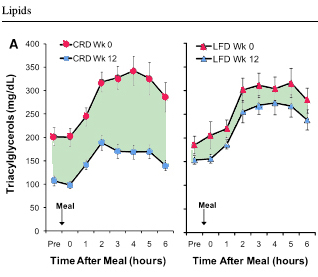 Maybe it’s the Fructose.
The fructose experiments can be shaved with Occam’s razor — insofar as we can tell, reducing carbohydrate across the board is more effective than changing type of carbohydrate. But how do we know that the effect of reducing carbohydrates wasn’t due to removing fructose — fructose is a carbohydrate so carbohydrate restriction may be due to the de facto removal of the fructose? Well, we don’t. It’s unlikely but possible. Where does this leave us? Wikipedia cites Bertrand Russell’s variation of Occam’s Razor: “Whenever possible, substitute constructions out of known entities for inferences to unknown entities.” This is a pompous way of saying: “don’t make things up.”
Another way of looking at Stanhope’s experiment is to recognize that it does not show, as the title says, “Consuming fructose-sweetened, not glucose-sweetened, beverages increases visceral adiposity and lipids… in overweight/obese humans.” What the paper really is about is “Consuming fructose-sweetened, not glucose-sweetened, beverages as part a high carbohydrate diet (55 % of energy) increases….” In other words, you don’t know whether you would get any benefit in changing from fructose to glucose if the total carbohydrate were lower. In terms of our Occam’s Razor equation, you can’t say that you have proved that your results are due to A (the major controlling variable (carbohydrate)) when all you have studied is A with the specific change in the B term (secondary effect of the type of carbohydrate). Stanhope’s experiment shows: if you are on a high carbohydrate diet, replacing glucose with fructose will make things worse but that’s different than saying that fructose is toxic. From a practical point of view, if you are on a high carbohydrate diet and it is not giving you the health benefit you want, replacing sugar with starch may give you disappointing results compared to simply cutting down on carbohydrates.
How to Reduce Fructose Consumption.
If you want to encourage fructose reduction, encourage carbohydrate restriction (this is where we have the most information) with the additional proviso of recommending fructose reduction as the first carbohydrate to remove (may also help but we have less data).
Flawed Studies.
In combination with the previous post, a summary of things to look for in a study to make sure that the authors are not misleading you and/or themselves:
1. Understatement is good. “Healthy” is a value judgement. “Fructose-sweetened” is not the same thing as “fructose-sweetened in a high carbohydrate diet.”
2. Where are the pictures? The author has an obligation to make things clear. A graphic representation is usually an indication of a desire to explain.
3. Has Occam’s Razor been applied? Are secondary effects taken as primary?
Crabtree’s Bludgeon
Finally, we should not forget Crabtree’s Bludgeon which is described by Wikipedia as “a foil to Occam’s Razor” and “attributed to the fictitious poet, Joseph Crabtree, after whom the Crabtree Foundation is named.” It may be expressed as:
‘No set of mutually inconsistent observations can exist for which some human intellect cannot conceive a coherent explanation, however complicated.’
Reading the Scientific Literature. A Guide to Flawed Studies.
Posted: July 11, 2012 in Association and Causality, The Nutrition Story, triglyceridesTags: low carbohydrate, nutrition, scientific literature, statistics
Doctor: Therein the patient
Must minister to himself.
Macbeth: Throw physic [medicine] to the dogs; I’ll none of it.
— William Shakespeare, Macbeth
The quality of nutrition papers even in the major scientific and medical journals is so variable and the lack of restraint in the popular media is so great that it is hard to see how the general public or even scientists can find out anything at all. Editors and reviewers are the traditional gate-keepers in science but in an area where rigid dogma has reached Galilean proportions, it is questionable that any meaningful judgement was made: it is easy to publish papers that conform to the party line (“Because of the deleterious effects of dietary fructose, we hypothesized that…”) and hard to publish others: when JAMA published George Bray’s “calorie-is-a-calorie” paper and I pointed out that the study more accurately supported the importance of carbohydrate as a controlling variable, the editor declined to publish my letter. In this, the blogs have performed a valuable service in providing an alternative POV but if the unreliability is a problem in the scientific literature, that problem is multiplied in internet sources. In the end, the consumer may feel that they are pretty much out there on their own. I will try to help. The following was posted on FatHead’s Facebook page:
How does one know if a study is ‘flawed’? I see a lot of posts on here that say a lot of major studies are flawed. How? Why? What’s the difference if I am gullible and believe all the flawed studies, or if I (am hopefully not a sucker) believe what the Fat Heads are saying and not to believe the flawed studies — eat bacon.
Where are the true studies that are NOT flawed…. and how do I differentiate? : /
My comment was that it was a great question and that it would be in the next post so I will try to give some of the principles that reviewers should adhere to. Here’s a couple of guides to get started. More in future posts:
1. “Healthy” (or “healthful”) is not a scientific term. If a study describes a diet as “healthy,” it is almost guaranteed to be a flawed study. If we knew which diets were “healthy,” we wouldn’t have an obesity epidemic. A good example is the paper by Appel, et al. (2005). “Effects of protein, monounsaturated fat, and carbohydrate intake on blood pressure and serum lipids: results of the OmniHeart randomized trial,” whose conclusion is:
“In the setting of a healthful diet, partial substitution of carbohydrate with either protein or monounsaturated fat can further lower blood pressure, improve lipid levels, and reduce estimated cardiovascular risk.”
It’s hard to know how healthful the original diet, a “carbohydrate-rich diet used in the DASH trials … currently advocated in several scientific reports” really is if removing carbohydrate improved everything.
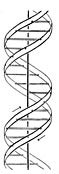
Generally, understatement is good. One of the more famous is from Watson & Cricks’s 1953 paper in which they proposed the DNA double helix structure. They said “It has not escaped our notice that the specific pairing we have postulated immediately suggests a possible copying mechanism for the genetic material.” A study with the word “healthy” is an infomercial.
2. Look for the pictures (figures). Presentation in graphic form usually means the author wants to explain things to you, rather than snow you. This is part of the Golden Rule of Statistics that I mentioned in my blogpost “The Seventh Egg” which discusses a very flawed study from Harvard on egg consumption. The rule comes from the book PDQ Statistics:
“The important point…is that the onus is on the author to convey to the reader an accurate impression of what the data look like, using graphs or standard measures, before beginning the statistical shenanigans. Any paper that doesn’t do this should be viewed from the outset with considerable suspicion.”
The Watson-Crick paper cited above had the diagram of the double-helix which essentially became the symbol of modern biology. It was drawn by Odile, Francis’s wife, who is described as being famous for her nudes, only one of which I could find on the internet.

Krauss, et. al. Separate effects of reduced carbohydrate intake and weight loss on atherogenic dyslipidemia.
The absence of a figure may indicate that the authors are not giving you a chance to actually see the results, that is, the experiment may not be flawed but the interpretation may be misleading, intentionally or otherwise. An important illustration of the principle is a paper published by Krauss. It is worth looking at this paper in detail because the experimental work is very good and the paper directly — or almost directly — confronts a big question in diet studies: when you reduce calories by cutting out carbohydrate, is the effect due simply to lowering calories or is there a specific effect of carbohydrate restriction. The problem is important since many studies compare low-carbohydrate and low-fat diets where calories are reduced on both. Because the low-carbohydrate diet generally has the better weight loss and better improvement in HDL and triglycerides, it is said that it was the weight loss that caused the lipid improvements.
So Krauss compared the effects of carbohydrate restriction and weight loss on the collection of lipid markers known collectively as atherogenic dyslipidemia. The markers of atherogenic dyslipidemia, which are assumed to predispose to cardiovascular disease, include high triglycerides (triacylglycerol), low HDL and high concentrations of the small dense LDL.
Here is how the experiment was set up: subjects first consumed a baseline diet of 54% of energy as carbohydrate, for 1 week. They were then assigned to one of four groups. Either they continued the baseline diet, or they kept calories constant but reduced carbohydrate by putting fat in its place. The three lower carbohydrate diets had 39 % or 26 % carbohydrate or 26 % carbohydrate with higher saturated fat. After 3 weeks on constant calories but reduced carbohydrate, calories were decreased by 1000 kcal/d for 5 week and, finally, energy was stabilized for 4 weeks and the features of atherogenic dyslidemia were measured at week 13. The protocol is shown in the figure from Krauss’s paper:

The Abstract of the paper describes the outcomes and the authors’ conclusions.
Results: The 26%-carbohydrate, low-saturated-fat diet reduced [atherogenic dylipidemia]. These changes were significantly different from those with the 54%-carbohydrate diet. After subsequent weight loss, the changes in all these variables were significantly greater…(my italics)
Now there is something odd about this. It is the last line of the conclusion that is really weird. If you lose weight, the effect of carbohydrate is not significant? As described below, Jeff Volek and I re-analyzed this paper so I have read that line a dozen times and I have no idea what it means. In fact, the whole abstract is strange. It will turn out that the lower (26 %) is certainly “significantly different from.. the 54%-carbohydrate diet” but it is not just different but much better. Why would you not say that? The Abstract is generally written so that it sounds negative about low carbohydrate effects but it is already known from Krauss’s previous work and others that carbohydrate restriction has a beneficial effect on lipids and the improvements in lipid markers occur on low-carbohydrate diets whether weight is lost or not. The last sentence doesn’t seem to make any sense at all. For one thing, the experiment wasn’t done that way. As set up, weight loss came after carbohydrate restriction. So, let’s look at the data in the paper. There are few figures in the paper and Table 2 in the paper presents the results in a totally mind-numbing layout. Confronted with data like this, I sometimes stop reading. After all, if the author doesn’t want to conform to the Golden Rule of Statistics, if they don’t want to really explain what they accomplished, how much impact is the paper going to have. In this case, however, it is clear that the experiment was designed correctly and it just seems impossible from previous work that this wouldn’t support the benefits of carbohydrate restriction and the negative tone of the Abstract needs to be explained. So we all had to slog through those tables. Let’s just look at the triglycerides since this is one of the more telling attributes of atherogenic dyslpidemia. Here’s the section from the Table:

Well this looks odd in that the biggest change is in the lowest carb group with high SF but it’s hard to tell what the data look like. First it is reported as logarithms. You sometime take logs of your data in order to do a statistical determination but that doesn’t change the data and it is better to report the actual value. In any case, it’s easy enough to take antilogs and we can plot the data. This is what it looks like:

It’s not hard to see what the data really show: Reducing carbohydrate has an overwhelming effect on triglycerides even without weight loss. When weight loss is introduced, the high carbohydrate diets still can’t equal the performance of the carbohydrate reduction phase. (The dotted line in the figure are data from Volek’s earlier work which Krauss forgot to cite).
The statements in the Conclusion from the Abstract are false and totally misrepresent the data. It is not true as it says “carbohydrate restriction and weight loss provide equivalent…” effects. The carbohydrate-reduction phase is dramatically better than the calorie restriction phase and it is not true that they are “non-additive” Is this an oversight? Poor writing? Well, nobody knows what Krauss’s motivations were but Volek and I plotted all of the data from Krauss’s paper and we published a paper in Nutrition & Metabolism providing an interpretation of Krauss’s work (with pictures). Our conclusion:
Summary Although some effort is required to disentangle the data and interpretation, the recent publication from Krauss et al. should be recognized as a breakthrough. Their findings… make it clear that the salutary effects of CR on dyslipidemia do not require weight loss, a benefit that is not a feature of strategies based on fat reduction. As such, Krauss et al. provides one of the strongest arguments to date for CR as a fundamental approach to diet, especially for treating atherogenic dyslipidemia.
An important question in this experiment, however, is whether even in the calorie reduction phase, calories are actually the important variable. This is a general problem in calorie restriction studies if for no other reason than that there is no identified calorie receptor. When we published this data, Mike Eades pointed out that in the phase in which Krauss reduced calories, it was done by reducing macronutrients across the board so carbohydrate was also reduced and that might be the actual controlling variable so we plotted the TAG against carbohydrate in each phase (low, medium and high carb (LC, MC, HC) without or with weight loss (+WL) and the results are shown below
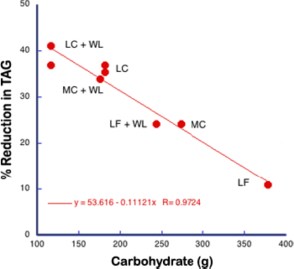
This is remarkably good agreement for a nutrition study. When you consider carbohydrates as the independent variable, you can see what’s going on. Or can you? After all, by changing the variables you have only made an association between carbohydrate and outcome of an experiment. So does this imply a causal relation between carbohydrate and triglycerides or not? It is widely said that observational studies do not imply causality, that observational studies can only provide hypothesis for future testing. It certainly seems like causality is implied here. It will turn out that a more accurate description is that observational studies do not necessarily imply causality and I will discuss that in the next posts. The bottom line will be that there is flaw in grand principles like “Random controlled trials are the gold standard.” “Observational studies are only good for generating hypotheses,” “Metabolic Ward Studies are the gold standard.” Science doesn’t run on such arbitrary rules.
Making Americans Afraid of Meat.
Posted: May 13, 2012 in Association and Causality, Crisis in Nutrition, Red Meat, saturated fatTags: carbohydrate, Meat Intake and Mortality, red meat,, statistics
TIME: You’re partnering with, among others, Harvard University on this. In an alternate Lady Gaga universe, would you have liked to have gone to Harvard?
Lady Gaga: I don’t know. I am going to Harvard today. So that’ll do.
— Belinda Luscombe, Time Magazine, March 12, 2012
There was a sense of déja-vu about the latest red meat scare and I thought that my previous post as well as those of others had covered the bases but I just came across a remarkable article from the Harvard Health Blog. It was entitled “Study urges moderation in red meat intake.” It describes how the “study linking red meat and mortality lit up the media…. Headline writers had a field day, with entries like ‘Red meat death study,’ ‘Will red meat kill you?’ and ‘Singing the blues about red meat.”’
What’s odd is that this is all described from a distance as if the study by Pan, et al (and likely the content of the blog) hadn’t come from Harvard itself but was rather a natural phenomenon, similar to the way every seminar on obesity begins with a slide of the state-by-state development of obesity as if it were some kind of meteorologic event.
When the article refers to “headline writers,” we are probably supposed to imagine sleazy tabloid publishers like the ones who are always pushing the limits of first amendment rights in the old Law & Order episodes. The Newsletter article, however, is not any less exaggerated itself. (My friends in English Departments tell me that self-reference is some kind of hallmark of real art). And it is not true that the Harvard study was urging moderation. In fact, it is admitted that the original paper “sounded ominous. Every extra daily serving of unprocessed red meat (steak, hamburger, pork, etc.) increased the risk of dying prematurely by 13%. Processed red meat (hot dogs, sausage, bacon, and the like) upped the risk by 20%.” That is what the paper urged. Not moderation. Prohibition. Who wants to buck odds like that? Who wants to die prematurely?
It wasn’t just the media. Critics in the blogosphere were also working over-time deconstructing the study. Among the faults that were cited, a fault common to much of the medical literature and the popular press, was the reporting of relative risk.
The limitations of reporting relative risk or odds ratio are widely discussed in popular and technical statistical books and I ran through the analysis in the earlier post. Relative risk destroys information. It obscures what the risks were to begin with. I usually point out that you can double your odds of winning the lottery if you buy two tickets instead of one. So why do people keep doing it? One reason, of course, is that it makes your work look more significant. But, if you don’t report the absolute change in risk, you may be scaring people about risks that aren’t real. The nutritional establishment is not good at facing their critics but on this one, they admit that they don’t wish to contest the issue.
Nolo Contendere.
“To err is human, said the duck as it got off the chicken’s back”
— Curt Jürgens in The Devil’s General
Having turned the media loose to scare the American public, Harvard now admits that the bloggers are correct. The Health NewsBlog allocutes to having reported “relative risks, comparing death rates in the group eating the least meat with those eating the most. The absolute risks… sometimes help tell the story a bit more clearly. These numbers are somewhat less scary.” Why does Dr. Pan not want to tell the story as clearly as possible? Isn’t that what you’re supposed to do in science? Why would you want to make it scary?
The figure from the Health News Blog:
|
Deaths per 1,000 people per year |
||
| 1 serving unprocessed meat a week | 2 servings unprocessed meat a day | |
| Women |
7.0 |
8.5 |
| 3 servings unprocessed meat a week | 2 servings unprocessed meat a day | |
| Men |
12.3 |
13.0 |
Unfortunately, the Health Blog doesn’t actually calculate the absolute risk for you. You would think that they would want to make up for Dr. Pan scaring you. Let’s calculate the absolute risk. It’s not hard.Risk is usually taken as probability, that is, number cases divided by total number of participants. Looking at the men, the risk of death with 3 servings per week is equal to the 12.3 cases per 1000 people = 12.3/1000 = 0.1.23 = 1.23 %. Now going to 14 servings a week (the units in the two columns of the table are different) is 13/1000 = 1.3 % so, for men, the absolute difference in risk is 1.3-1.23 = 0.07, less than 0.1 %. Definitely less scary. In fact, not scary at all. Put another way, you would have to drastically change the eating habits (from 14 to 3 servings) of 1, 429 men to save one life. Well, it’s something. Right? After all for millions of people, it could add up. Or could it? We have to step back and ask what is predictable about 1 % risk. Doesn’t it mean that if a couple of guys got hit by cars in one or another of the groups whether that might not throw the whole thing off? in other words, it means nothing.
Observational Studies Test Hypotheses but the Hypotheses Must be Testable.
It is commonly said that observational studies only generate hypotheses and that association does not imply causation. Whatever the philosophical idea behind these statements, it is not exactly what is done in science. There are an infinite number of observations you can make. When you compare two phenomena, you usually have an idea in mind (however much it is unstated). As Einstein put it “your theory determines the measurement you make.” Pan, et al. were testing the hypothesis that red meat increases mortality. If they had done the right analysis, they would have admitted that the test had failed and the hypothesis was not true. The association was very weak and the underlying mechanism was, in fact, not borne out. In some sense, in science, there is only association. God does not whisper in our ear that the electron is charged. We make an association between an electron source and the response of a detector. Association does not necessarily imply causality, however; the association has to be strong and the underlying mechanism that made us make the association in the first place, must make sense.
What is the mechanism that would make you think that red meat increased mortality. One of the most remarkable statements in the original paper:
“Regarding CVD mortality, we previously reported that red meat intake was associated with an increased risk of coronary heart disease2, 14 and saturated fat and cholesterol from red meat may partially explain this association. The association between red meat and CVD mortality was moderately attenuated after further adjustment for saturated fat and cholesterol, suggesting a mediating role for these nutrients.” (my italics)
This bizarre statement — that saturated fat played a role in increased risk because it reduced risk— was morphed in the Harvard News Letters plea bargain to “The authors of the Archives paper suggest that the increased risk from red meat may come from the saturated fat, cholesterol, and iron it delivers;” the blogger forgot to add “…although the data show the opposite.” Reference (2) cited above had the conclusion that “Consumption of processed meats, but not red meats, is associated with higher incidence of CHD and diabetes mellitus.” In essence, the hypothesis is not falsifiable — any association at all will be accepted as proof. The conclusion may be accepted if you do not look at the data.
The Data
In fact, the data are not available. The individual points for each people’s red meat intake are grouped together in quintiles ( broken up into five groups) so that it is not clear what the individual variation is and therefore what your real expectation of actually living longer with less meat is. Quintiles are some kind of anachronism presumably from a period when computers were expensive and it was hard to print out all the data (or, sometimes, a representative sample). If the data were really shown, it would be possible to recognize that it had a shotgun quality, that the results were all over the place and that whatever the statistical correlation, it is unlikely to be meaningful in any real world sense. But you can’t even see the quintiles, at least not the raw data. The outcome is corrected for all kinds of things, smoking, age, etc. This might actually be a conservative approach — the raw data might show more risk — but only the computer knows for sure.
Confounders
“…mathematically, though, there is no distinction between confounding and explanatory variables.”
— Walter Willett, Nutritional Epidemiology, 2o edition.
You make a lot of assumptions when you carry out a “multivariate adjustment for major lifestyle and dietary risk factors.” Right off , you assume that the parameter that you want to look at — in this case, red meat — is the one that everybody wants to look at, and that other factors can be subtracted out. However, the process of adjustment is symmetrical: a study of the risk of red meat corrected for smoking might alternatively be described as a study of the risk from smoking corrected for the effect of red meat. Given that smoking is an established risk factor, it is unlikely that the odds ratio for meat is even in the same ballpark as what would be found for smoking. The figure below shows how risk factors follow the quintiles of meat consumption. If the quintiles had been derived from the factors themselves we would have expected even better association with mortality.

The key assumption is that the there are many independent risk factors which contribute in a linear way but, in fact, if they interact, the assumption is not appropriate. You can correct for “current smoker,” but biologically speaking, you cannot correct for the effect of smoking on an increased response to otherwise harmless elements in meat, if there actually were any. And, as pointed out before, red meat on a sandwich may be different from red meat on a bed of cauliflower puree.
This is the essence of it. The underlying philosophy of this type of analysis is “you are what you eat.” The major challenge to this idea is that carbohydrates, in particular, control the response to other nutrients but, in the face of the plea of nolo contendere, it is all moot.
Who paid for this and what should be done.
We paid for it. Pan, et al was funded in part by 6 NIH grants. (No wonder there is no money for studies of carbohydrate restriction). It is hard to believe with all the flaws pointed out here and, in the end, admitted by the Harvard Health Blog and others, that this was subject to any meaningful peer review. A plea of no contest does not imply negligence or intent to do harm but something is wrong. The clear attempt to influence the dietary habits of the population is not justified by an absolute risk reduction of less than one-tenth of one per cent, especially given that others have made the case that some part of the population, particularly the elderly may not get adequate protein. The need for an oversight committee of impartial scientists is the most important conclusion of Pan, et al. I will suggest it to the NIH.
Guest Review: Nutritional Chromodynamics
Posted: April 1, 2012 in Guest BlogTags: Dietary Guidelines for Americans, red meat,
April 1, 2012. Piltdown, East Sussex, UK . Two prominent researchers, Drs. Ferdinand I. Charm and June E. Feigen of the University of Piltdown Center for Applied Nutrition (PCAN), submit the following guest review on a ground-breaking area of nutrition.
Nutrition is frequently accused of being a loose kind of science, not defining its terms and speaking imprecisely. Complex carbohydrates, for example, still refer, in organic chemistry, to polysaccharides such as starches and for many years, it was absolute dogma in nutrition that complex carbohydrates were more slowly absorbed than simple sugars. Science advances, however, and when measurements were actually made it was found not to be so simple, giving rise to the concept of the glycemic index. The term “complex,” had since then been used loosely but has currently evolved to have a more precise meaning derived from mathematics, that is, as in complex numbers, having a real part and an imaginary part although the recent Guidelines from the USDA make it difficult to tell which is which. In any case, the glycemic index has expanded to the concept of a glycemic load and now there is even more hope on the horizon.
Nutrition has borrowed a page from particle physics in the application of quantum chromodynamics. In the way of background, the discovery of the large number of subatomic particles and the need to classify them meant that designations had to go beyond charge and spin to include strangeness and the three flavors of quarks. Ultimately, it was decided that quarks have an additional degree of freedom, called color and the strong interaction was identified as a color force. A large amount of evidence supports this idea with interaction via the gluons.
Nutritional Chromodynamics.
A similar idea has arisen in nutrition and it is now clear that the more color, the better and extensive experimental work at CARN is currently under way (Figure 1). The recent CRAYOLA study showed the value of spectral nutrient density. Support for the theory was summarized in a recent press release:
Blueberries were up there, the wild type being the best.
“The wild blueberries are blue inside as well as blue outside. The ones we normally eat are sort of white inside. So there are more of the antioxidants in these all-blue blueberries.”
Along the line of color is good, cranberries were close behind as were blackberries.
But what about vegetables?
Dried red beans topped the list overall–red kidney and pinto beans were also in the top 10. But surprisingly, so are artichokes. “This is sort of interesting because they are not deeply colored, the inside, the part that we actually consume is white or very pale green but never the less they contain very large amounts of antioxidants.”
There are nuts that did not make it into the top twenty but did have high enough content worthy of mention– pecans, hazelnuts and walnuts were the ones with the greatest antioxidant content. But the antioxidants are concentrated, so you need only a handful a day to get the amount you need.
The problem here may be the bland coloration of the nuts. This has been jarring to some theorists, leading many to question whether the Standard Model of nutrition will last, or whether the highly abstract bean-string theory will ultimately prevail. The recent identification of chocolate with the dark matter that fills the majority of the universe, however, has established the field of nutritional chromodynamics. Still, critics point to the problem of red meat, one of the very few foods that actually decreased during the epidemic of obesity. By applying the USDA Nutritional Guidelines, however, this result can be made to vanish.

Figure 1 Souper-Collider at CARN (Centre Alimentaire de Recherche Nucléaire).
Although this is pretty convincing, there is the uncertainty principle. Because the outcome of a nutritional experiment and its support for the experimenter’s theory rarely commute, it is impossible to simultaneously measure outcome and whether the results mean anything. Again borrowing from particle physics, there is the concept of the virtual particle that mediates interaction between other particles. The evolving principle in the field of nutritional chromodynamics is the existence of the mayon, the virtual particle that mediates the so-called Dietary Weak Interaction or DWI, as in “phytochemicals may prevent cancer.”
And then there is the matter of Quark. Most physicists know that Quark is the German word for sour cream and many physicists on tour in Germany have their picture taken in front of delicatessens selling Quark (at least those who don’t have their picture taken in front of a jewelry store). Less widely known outside of the German-speaking countries is that Quark colloquially means nonsense or trash. In any case, it’s pretty clear at this point that, the Tevatron results notwithstanding, blueberries and sour cream are the real Top Quark.
The Office of Research Integrity is hosting a conference on the Quest for Research Excellence and, for the first time, there is session that directly confronts policy and The Crises in Nutrition. The Speakers will delineate the problem — the two worlds of establishment nutrition and the major challenge of low carbohydrate diets, the growing problems of childhood obesity and our failure to deal with it, the confusion in the popular press on scientific issues, and finally, the voice of the patient, the failure to listen to the people who are dissatisfied with official guidelines and who have found workable solutions themselves. Three specific goals are recommended: 1) open hearings in which all researchers are represented, 2) funding research in which all people in low carbohydrate research work with others and finally, 3) a new oversight agency from NSF or Office of Research and Technology Policy.
The three goals may be a useful crystallizing point for moving forward. What can you do?
- Contact your elected officials and copy one of the authors from the conference. Use the Abstracts below as a basis for your own version of what needs to be done. The three goals can be more narrowly focussed for your own interests.
- Encourage local media to cover the meeting. Information is at http://ori.hhs.gov and the speakers can be contacted directly.
- Publicize your version of the three goals on your blog, your facebook page or other social media.

2011 Office of Research Integrity Conference Washington DC
Quest for Research Excellence, March 15, 2012.
Session on Crisis in Nutrition.
Chair: Richard David Feinman Contact Information: feinman@mac.com (917) 554-7794
Introduction and Abstracts.
The interest in nutrition for general health and for the prevention and treatment of disease is probably greater than at any time in history. A fairly large research community has grown up to provide information on the subject but the excellence of the results and their ability to inform the general public is highly questionable. The prospect for the future quality of research is similarly discouraging. This session focusses on a crisis in nutrition: the confusion in the public’s mind and the lack of accountability of official agencies and their failure to consider minority points of view. Four areas are considered in this session: the need to consider work that has been done on carbohydrate restriction (the major alternative to current recommendations), the limitations of current media representations of research, the problem of childhood obesity, and finally, the failure to listen to the patients who have not been well served by current ideas and who have discovered alternatives for themselves. The public, athrough forums and comments to blogs and other social media, have expressed substantial dissatisfaction with the current state of medical nutrition.
Three approaches are suggested as first steps for resolving the current crises:
- First, we need hearings to be held by congress or HHS in which all major researchers in nutrition are represented. We have to have everybody in the game. The USDA guidelines committee, the American Health Association nutrition panels have to meet with their critics. In particular, researchers in dietary carbohydrate restriction should be able to meet and discuss issues with their critics. This is what the government can do. Better than taxation or other punitive measures, they can bring out the information. The NIH or congress should hold meaningful hearings where all sides are heard.
- Second, we need to fund a study in which researchers in dietary carbohydrate restriction and critics of such diets cooperate to design a long-term comparison of CRD and low-fat diets, Mediterranean diets or whatever. The groups agree on methods of procedure, make-up of the diets, how compliance will be effected, and what parameters will be measured. They “write the paper first, leaving room for the data,” that is, they agree in advance on what the possible outcomes are and what conclusions could be drawn from them. In this way, the public and other scientists will have a sense that the issues have adequately been addressed and the results reliably evaluated.
- Finally, what’s needed is the creation of a new oversight organization, possibly under the auspices of the National Science Foundation or the Office of Science and Technology Policy in which scientists with no personal stake in nutrition, assess bias in grant awards and publications. The scientific principles involved in nutrition are neither so technical nor so profound that accomplished scientists from other fields cannot evaluate them. Such organizations might make recommendations (or indicate the limitations in existing knowledge that prevent making recommendations) after hearing all credentialed experts.
In the end, we have to say whether there is really a problem or not. Is their really an epidemic of obesity and overweight? Is there a crisis in the incidence of diabetes, or not? Are our health problems, the rising cost, the patient suffering, real? If they’re real, we have to use everything we have. We have to have real science and we can’t continue with one expert committee after another making recommendations but taking no responsibility for outcomes and refusing to show any willingness to confront their critics.
Crisis in nutrition: I. Research Integrity and the Challenge of Carbohydrate Restriction.
Author: Richard David Feinman.
Objective: Research integrity extends beyond falsification of data and explicit misconduct. We assessed the extent to which established majority opinion recommending dietary fat and saturated fat reduction has failed to cite contradictory evidence, accepted undocumented conclusions and marginalized contributions of alternative points of view, specifically the role of dietary carbohydrate restriction, the major challenge to current recommendations..
Main points: Government and private health agencies have long recommended a reduction in dietary fat, particularly saturated fat, in the treatment or prevention of cardiovascular disease, obesity and diabetes. While there are many disclaimers, low-fat in some form remains the standard nutritional recommendation. Alternative strategies based on control of insulin fluctuations via carbohydrate restriction, while widely used by many in the community, have been discouraged if not actually attacked. This has contributed to a “two worlds” system that has increased confusion among scientists and the public. While there are many exceptions and some emerging acceptance of carbohydrate restriction — which frequently fails to cite earlier work — there is a perception of a majority opinion with pervasive control of the scientific infrastructure: editorial boards, study sections and health agency administration. Examples will be given of undocumented negative statements about low-carbohydrate diets, misrepresentation of data and extensive failure to cite relevant papers from the literature. Most troubling is the tendency to accept some of the conclusions previously demonstrated in low-carbohydrate research without, again, giving appropriate citations to that research. This has led a significant part of the population to distrust official recommendations and medical science.
There is a need to re-evaluate published data on carbohydrate restriction and to guarantee adequate peer review of future manuscripts and grant applications on macronutrient composition of the diet. More generally, better communication and cooperation between researchers and physicians with different opinions can only benefit science and society, a society that is admittedly not making good progress on obesity, diabetes and metabolic syndrome.
Conclusions & Recommendations:
Recommendations for better integration of different points of view include government-sponsored meetings where all scientific approaches can present their own opinions and address critics, representation on study sections and editorial boards of people with experience in carbohydrate restriction-insulin control diets and long term comparative trials that include PIs with experience and understanding of the role of the glucose-insulin axis in obesity, diabetes and metabolic syndrome. Agreement in advance between the “two worlds” as to the expected outcomes and interpretations would provide most benefit for the public and scientist-community interactions. Given the pervasiveness of the problem, in the end, intervention of new oversight agencies, e.g. from NSF or Office of Science and Technology, may be needed
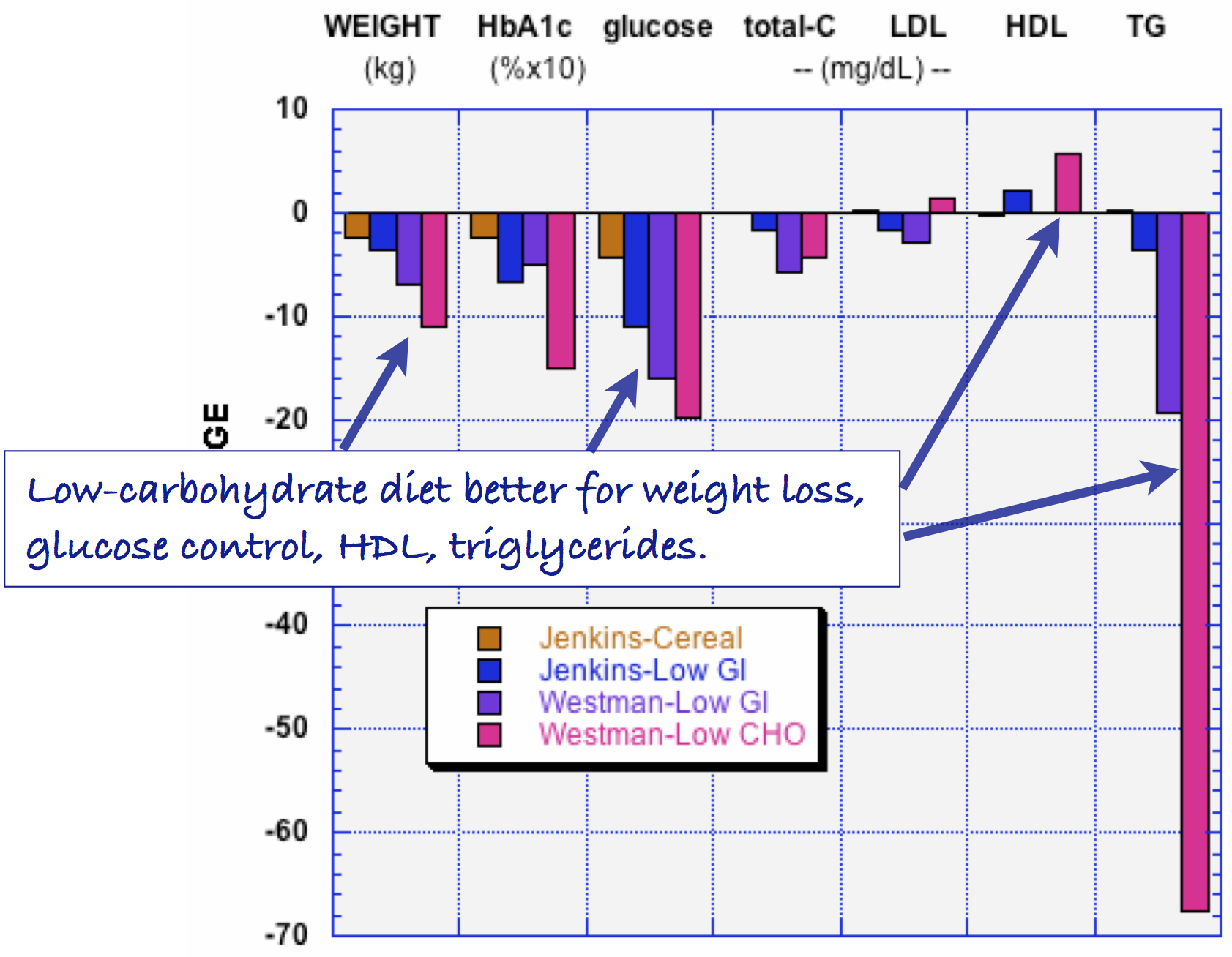
Figure 1. Comparison of low-carbohydrate diets to low-GI diets and high cereal diets.
Crisis in nutrition: II. The popular media and research publications
Author: Richard David Feinman.
Objective: The public relies on popular media for description of nutrition research. A major interest is the controversy over macronutrient composition of the diet and particularly the role carbohydrate-restriction, the major challenge to official recommendations. The goal is to assess the extent to which statements to the media and especially press releases from authors, author institutions and journals accurately represent the results of reported research. To determine the extent to which personal bias influences and is taken as fact by the media.
Main points: Authors of research papers should sensibly have great freedom in describing the implications of their research to the media, but it is important that the public be aware of when that opinion does or does not follow directly from the publication. Two examples are given. In one, an animal study (Foo, et al. Proc Natl Acad Sci USA 2009, 106: 15418-15423), the accompanying press release implied that it was motivated by observations of patients in a hospital which were not described, were unsubstantiated and would have been purely anecdotal. In a second example, a press release stated that carbohydrate-restricted diets (CRDs) were not included in a comparative study because of their low compliance (Sacks, et al. N Engl J Med 2009, 360: 859-873. No data were given to support this assertion and it is, in fact not true — CRDs have, on average, better compliance than other dietary interventions. The study concluded that the macronutrient composition of the diet was not important even though, as implemented, dietary intake was the same for the groups studied and, again, the CRD was not included in the study. It seems likely that that this would have an inhibiting effect on the willingness of individuals to choose a CRD, an outcome that was not justified by the published research.
Conclusions & recommendations: Practices should be evaluated and guidelines should be generated by academic societies, scientific journals and the popular media as to what constitutes appropriate press description of published research. Reasonable principle are that only those specific conclusions that derive directly from the publication. The generally accepted idea that authors make clear what is their personal opinion and what is the product of research should be the norm.
Biography: Richard David Feinman, PhD in Chemistry (University of Oregon) is Professor of Cell Biology at SUNY Downstate Medical Center. His current area of research is nutritional biochemistry and biochemical education especially as it relates to macronutrients and bioenergetics. He is founder of the Nutrition & Metabolism Society and former co-editor-in-chief of the journal Nutrition & Metabolism.
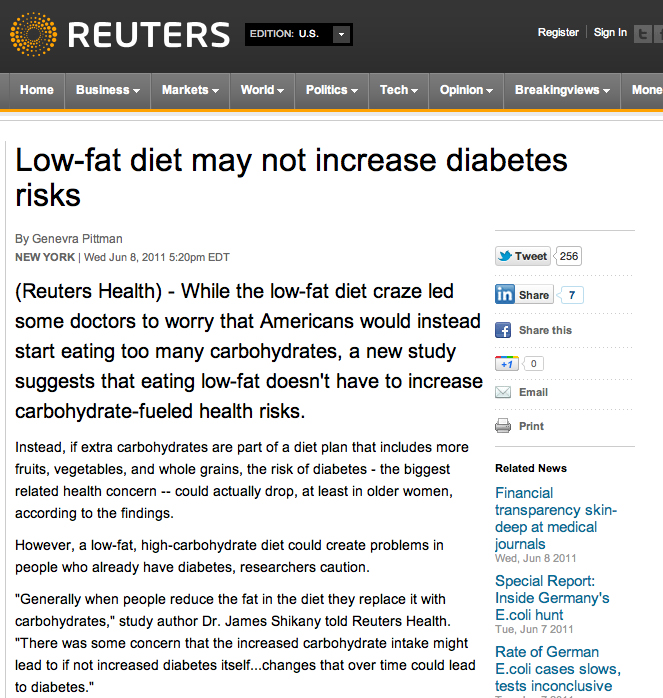
Figure 2. The world according to Reuters. Low-fat is good. It’s bad. It’s not as bad as we thought. Wait! Eat more fruits and vegetables. “The low-dat diet craze?” Is that what it’s been? Is?
Crisis in nutrition: III. Childhood Obesity: Prevention and Intervention
Author: Wendy Knapp Pogozelski, Dept of Chemistry, SUNY Geneseo, Geneseo, NY 14454.
Objective: Almost one-third of American children aged 2-11 qualify as obese or overweight, with obesity-related diseases such as type 2 diabetes greatly on the rise in this population. Despite the labeling of the crisis as “epidemic,” funding to study childhood obesity has been limited and restricted to the traditional intervention strategies (to reduce calories, to reduce dietary fat and to exercise more) despite the fact that these efforts have been largely unsuccessful. The time has come for frank assessment of foundational beliefs about a) the causes of obesity in children and b) effective prevention and intervention strategies. This talk will discuss assumptions that are barriers to research and will compare results from traditional calorie-restriction programs with results from programs that have emphasized carbohydrate control and insulin reduction.
Main points: The current generation of children is predicted to be the first to experience a lower life expectancy than that of its parents. Children across the world are experiencing unparalleled rates of obesity, heart disease and type 2 diabetes. Relatively little formal research has addressed the causes of childhood obesity, perhaps due to an assumption that the problem is already understood. Despite reluctance to use children as subjects in studies that depart from the traditional “eat less and exercise more” philosophies, it has been noted that the current efforts, dietary recommendations, educational programs and mandates of school lunch programs could be characterized as experiments. These experiments, like the numerous interventions based on traditional strategies, have had poor results but it has been very difficult to implement or fund those approaches that focus on carbohydrate control despite demonstrable success in this area. We will examine typical meals given in schools and at home, compare data from various obesity interventions and discuss causes of obesity on a molecular level
Conclusions & recommendations: The crisis warrants policy change. 1) Funding for childhood obesity should be increased. 2) A broader range of methods and principal investigators should be instituted, with greater accountability required of funded investigators. 3) The USDA nutritional recommendations, a “one size fits all” guide for school meal programs should be reevaluated and reformulated to take into account all strategies for obesity prevention and intervention. 4) Education for physicians, dietitians and health care professionals, as well as the general public, should be altered to include an understanding of the most positive results in obesity prevention.
Biography: Wendy Pogozelski, PhD in Chemistry (Johns Hopkins University) is Professor of Chemistry at SUNY Geneseo. Her research has been in radiation effects, DNA damage, and DNA computing. Current efforts are directed toward biochemical-based nutrition education for health professionals, educators and the general public. In addition to developing teaching materials that incorporate nutrition research, Dr. Pogozelski writes and lectures on diabetes and works with local and national organizations to improve nutrition education.

Figure 3. Before and After from James Bailes’s No More Fat Kids
Crisis in nutrition: IV. Vox Populi
Authors: Tom Naughton, Jimmy Moore, Laura Dolson
Objective: Blogs and other social media provide insights into how the public views the current state of nutrition science and the official dietary recommendations. We ask what can be learned from online discussions among people who dispute and distrust the official recommendations.
Main points: A growing share of the population no longer trusts the dietary advice offered by private and government health agencies. They believe the supposed benefits of the low-fat, grain-based diets promoted by those agencies are not based on solid science and that benefits of low-carbohydrate diets have been deliberately squelched. The following is typical of comments the authors (whose websites draw a combined 1.5 million visitors monthly) receive daily:
“The medical and pharmaceutical companies have no interest in us becoming healthy through nutrition. It is in their financial interest to keep us where we are so they can sell us medications.”
Similar distrust of the government’s dietary recommendations has been expressed by doctors and academics. The following comments, left by a physician on one of the authors’ blogs, are not unusual:
“You and Denise Minger should collaborate on a book about the shoddy analysis put out by hacks like the Dietary Guidelines Advisory Committee.”
“Sometimes I wonder if people making these statements even took a basic course in biochemistry and physiology.”
Many patients have given up on their health care professionals and turn to Internet sites for advice they trust. This is particularly true of people with diabetes who find that a low-fat, high-carbohydrate diet is not helping them control their blood glucose. As one woman wrote about her experience with a diabetes center:
“I was so frustrated, I quit going to the center for check ups.”
The data suggest a serious problem in science-community interactions which needs to be
explored.
Conclusions & recommendations: Our findings document a large number of such cases pointing to the need for public hearings and or conference. The community is not well served by an establishment that refuses to address its critics from within the general population as well as health professionals.

Figure 4. Some comments from the Active Low-Carber Forums (140, 660 members on March 12, 2012).
Biographies:
Tom Naughton is a former writer for a health magazine, a contributor to the Encylopedia Britannica’s Health and Medical Annual, a documentary filmmaker, and popular blogger who specializes in health and nutrition issues.
Jimmy Moore’s top-rated “Livin’ La Vida Low-Carb” blog has drawn more than 6 million visitors since 2005. His podcast show, “The Livin’ La Vida Low-Carb Show with Jimmy Moore” has featured interviews with hundreds of respected doctors and researcher. He has also authored two books.
Laura Dolson, MS is a writer and cancer support provider at Mediconsult.com, and hastaught health and nutrition classes at a junior high charter school in California. Her About.com nutrition website draws hundreds of thousands of visitors monthly.
Posted: March 12, 2012 in Crisis in Nutrition, low-carbohydrate diet, Research Integrity, The Nutrition Story, Volek-Westman principle
Tags: carbohydrate, dietary guidelines, In the face of contradictory evidence, low carbohydrate, Nutrition & Metabolism Society, USDA
 Richard David Feinman